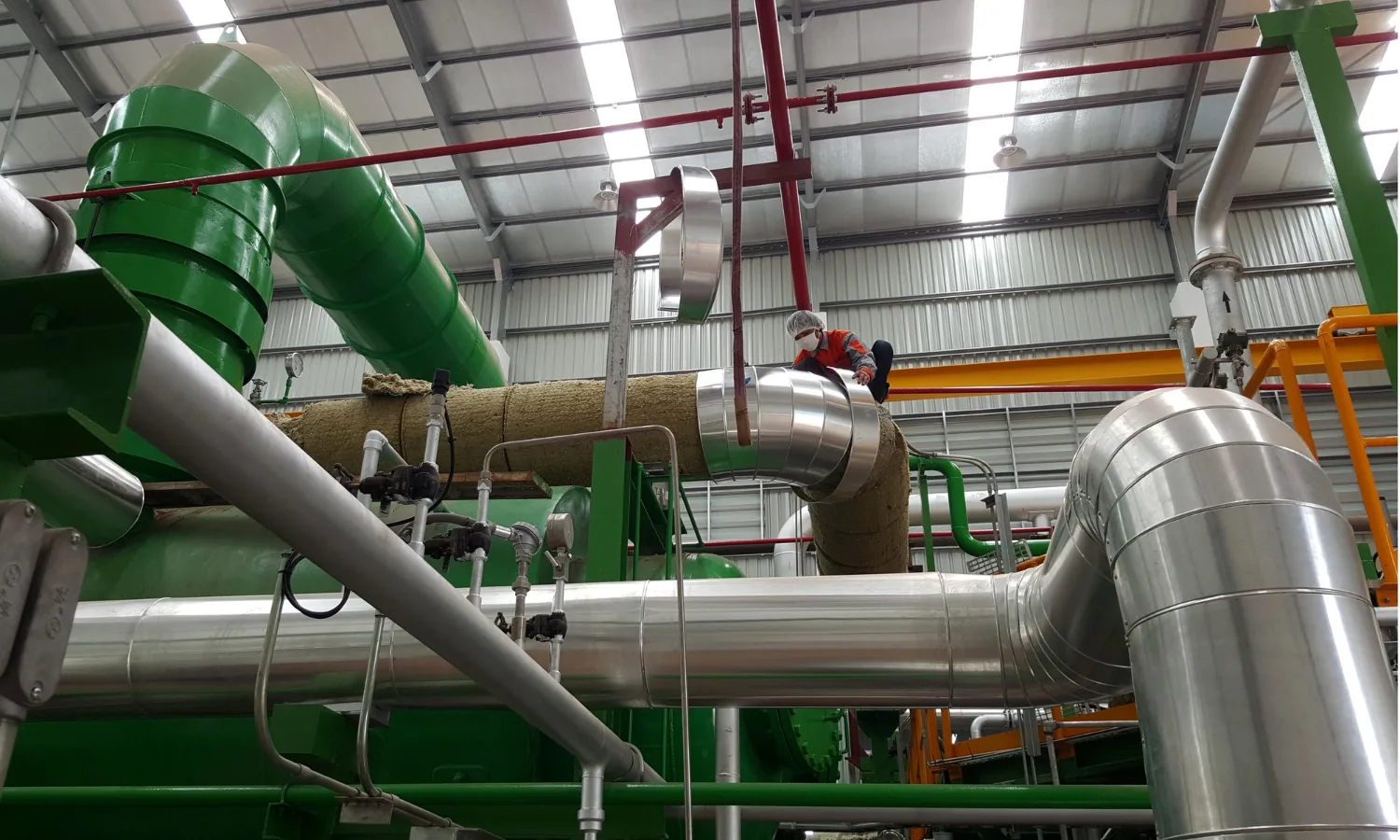



P91 vs. P22 Materials: Where They Are Used and What Fabrication Requires
P91 and P22 are chromium-molybdenum alloy steels used in power generation and industrial facilities operating at elevated temperatures. Although both grades are suitable for certain high-temperature pressure applications, their alloy composition, creep strength, and fabrication requirements differ. Grade selection depends on design conditions, applicable codes, and the welding and heat-treatment controls needed to preserve material properties.
At Southern Engineering Erectors (SEE), industrial piping projects involve material selection, fabrication, welding, inspection, and installation under defined engineering and quality requirements. Understanding the differences between P91 and P22 is particularly important when executing high-pressure steam piping and other alloy steel systems where welding and heat treatment directly affect component integrity.
P91 vs. P22: Key Material Differences
P22 is a 2.25Cr-1Mo alloy steel, while P91 is a modified 9Cr-1Mo-V steel containing additional alloying elements, including vanadium and niobium. P91's alloy composition and heat-treated microstructure generally provide greater elevated-temperature strength and creep resistance than P22.
| Parameter | P22 | P91 |
|---|---|---|
| Material composition | Approximately 2.25% chromium and 1% molybdenum | Approximately 9% chromium, 1% molybdenum, with vanadium and other alloying additions |
| Metallurgical characteristics | Commonly supplied in specified normalized and tempered or other permitted conditions | Typically supplied in a normalized and tempered condition |
| Elevated-temperature properties | Suitable for designated high-temperature pressure applications | Generally provides greater elevated-temperature strength and creep resistance |
| Fabrication requirements | Controlled welding, preheating, and applicable post-weld heat treatment | More stringent control of welding, temperature management, heat treatment, and hardness |
| Typical applications | Steam piping, headers, and pressure components within design limits | High-temperature, high-pressure steam piping, headers, and other specified pressure components |
P91 is not automatically the preferred material for every high-temperature application. Design temperature, pressure, component thickness, service conditions, code requirements, and project economics all influence material selection. The specified material condition and fabrication history also affect service performance.
Where P91 and P22 Are Used
P22 Steel Applications P22 is used in power plants and industrial process facilities where its specified strength and temperature capability meet the design requirements. Typical applications include selected steam piping, boiler headers, and pressure-containing components. Its suitability depends on the operating envelope and the applicable construction code. If P22 meets the design requirements, a higher-alloy grade may offer no necessary engineering benefit.
P91 Steel Applications P91 is commonly specified for high-temperature, high-pressure steam systems in thermal power plants, including main steam and hot reheat piping and associated pressure components where its properties are required. It may also be used in other industrial high-temperature services when supported by the design basis. Its higher creep strength can support pressure-boundary designs at elevated temperatures, but the material's advantages depend on correct manufacturing, welding, heat treatment, and service conditions.
Fabrication and Welding Requirements
P91 and P22 require controlled fabrication procedures, but P91 generally demands tighter metallurgical control. Welding procedures must reflect the material grade, thickness, joint design, welding process, consumables, and applicable code requirements.
- Preheating and Welding Procedure Qualification
Preheating helps manage cooling rates and reduce the risk of hydrogen-assisted cracking. The required preheat and interpass temperatures must follow the qualified welding procedure rather than a universal value. P91 welding requires particular attention to consumable selection, heat input, interpass temperature, and the qualified procedure's essential variables. Welding personnel must be qualified for the applicable process and work scope.
- Post Weld Heat Treatment
Post-weld heat treatment (PWHT) helps achieve the required metallurgical condition and control weld and heat-affected-zone hardness. For P22, PWHT requirements depend on the applicable code, material thickness, service, and approved procedure. P91 generally requires carefully controlled PWHT to develop the specified tempered microstructure and mechanical properties. Incorrect heat treatment can leave excessive hardness or reduce the material's intended elevated-temperature performance. Heating rates, holding times, cooling rates, and temperature uniformity must follow the approved procedure and governing requirements.
- Cooling, Inspection, and Testing
Uncontrolled cooling and deviations from specified temperature limits can compromise weld integrity. Fabrication teams must follow the prescribed cooling sequence and any requirements for maintaining temperature before heat treatment. Inspection should cover visual examination, specified nondestructive examination, hardness testing where required, and heat-treatment records, as applicable to the project.
Quality Control During Fabrication
Quality control begins with verifying the material grade against purchase specifications and drawings. Maintain material identification and traceability through cutting, fit-up, welding, heat treatment, and installation.
Key controls include:
- Approved welding procedure specifications and supporting qualifications.
- Qualified welding personnel and specified consumables.
- Recorded preheat, interpass temperature, and heat-treatment parameters.
- Material certificates, weld identification, inspection reports, and traceable test results.
- Verification that fabrication and inspection comply with project specifications and the applicable construction code.
Poor fabrication control can cause weld cracking, unacceptable hardness, rework, and reduced service life. For P91, improper heat treatment can also compromise the material's intended creep performance.
How Southern Engineering Supports Industrial Piping
Southern Engineering Erectors (SEE) brings extensive experience in industrial piping fabrication and erection across power, sugar, distillery, cogeneration, and process industries. Its capabilities include engineering, piping design, stress analysis, and fabrication of carbon steel, stainless steel, P22, and P91 piping systems.
For high-temperature piping applications, SEE's approach covers material traceability, controlled welding, nondestructive testing, pressure testing, and inspection documentation. Coordinating these activities with approved welding procedures, applicable heat-treatment requirements, and project specifications helps maintain fabrication quality and supports the requirements of installation and final handover.