

Steam Turbine Installation: Key Stages Before Commissioning
Steam turbine installation requires precise equipment positioning, coordinated mechanical and piping work, and systematic verification before commissioning can begin. Each stage must follow the approved installation sequence to identify discrepancies early and ensure that the turbine and its auxiliary systems are prepared for operational testing.
Southern Engineering Erectors (SEE) undertakes industrial mechanical erection, turbine-generator installation and alignment, and piping-related work for power, cogeneration, and process industries.
Foundation and Site Preparation
Installation begins by confirming that the foundation and work area meet the requirements specified in approved drawings and equipment documentation. Foundation dimensions, elevations, anchor-bolt positions, and mounting surfaces must be verified before equipment placement.
Key checks include:
- Foundation readiness, including verification of the specified concrete strength and confirmation that the foundation has been released for equipment installation.
- Anchor bolts, embedded parts, and mounting interfaces.
- Equipment access, lifting capacity, and rigging arrangements.
- Approved drawings, lifting plans, and installation procedures.
Discrepancies should be resolved before lifting begins to avoid positioning difficulties and corrective work later.
Equipment Positioning and Mechanical Installation
The turbine is lifted, positioned, and assembled according to the approved erection sequence and OEM instructions. Depending on the configuration, activities may involve the turbine casing, rotor, bearing housings, baseplate, and associated components. Generator installation is a related but separate activity when the turbine drives a generator.
Equipment handling must protect machined surfaces, shaft journals, and precision interfaces. After positioning, the installation team verifies the equipment's level, elevation, and seating against the approved requirements. Fastening, grouting, and subsequent assembly are then carried out in the prescribed sequence, with adjustments completed at the appropriate stages.
The prescribed sequence is important because premature tightening, grouting, or assembly can restrict adjustments required for correct equipment positioning. Inspection points and dimensional records document compliance with installation requirements.
Alignment and Mechanical Verification
Correct alignment maintains the required relative positions of rotating components including the turbine and generator shafts where they are coupled. Misalignment can contribute to vibration, increased bearing loads, and excessive forces on couplings.
Relevant checks may include:
- Shaft and coupling alignment, where applicable.
- Bearing installation and specified clearances.
- Casing position and mating-component alignment.
- Alignment verification after grouting, piping connections, bolt tightening, or other activities that could affect equipment position, as required by the approved installation procedure.
Use OEM documentation and project specifications to establish alignment acceptance criteria. Verification should also account for specified thermal-growth and operating-position requirements.
Piping and Auxiliary-System Integration
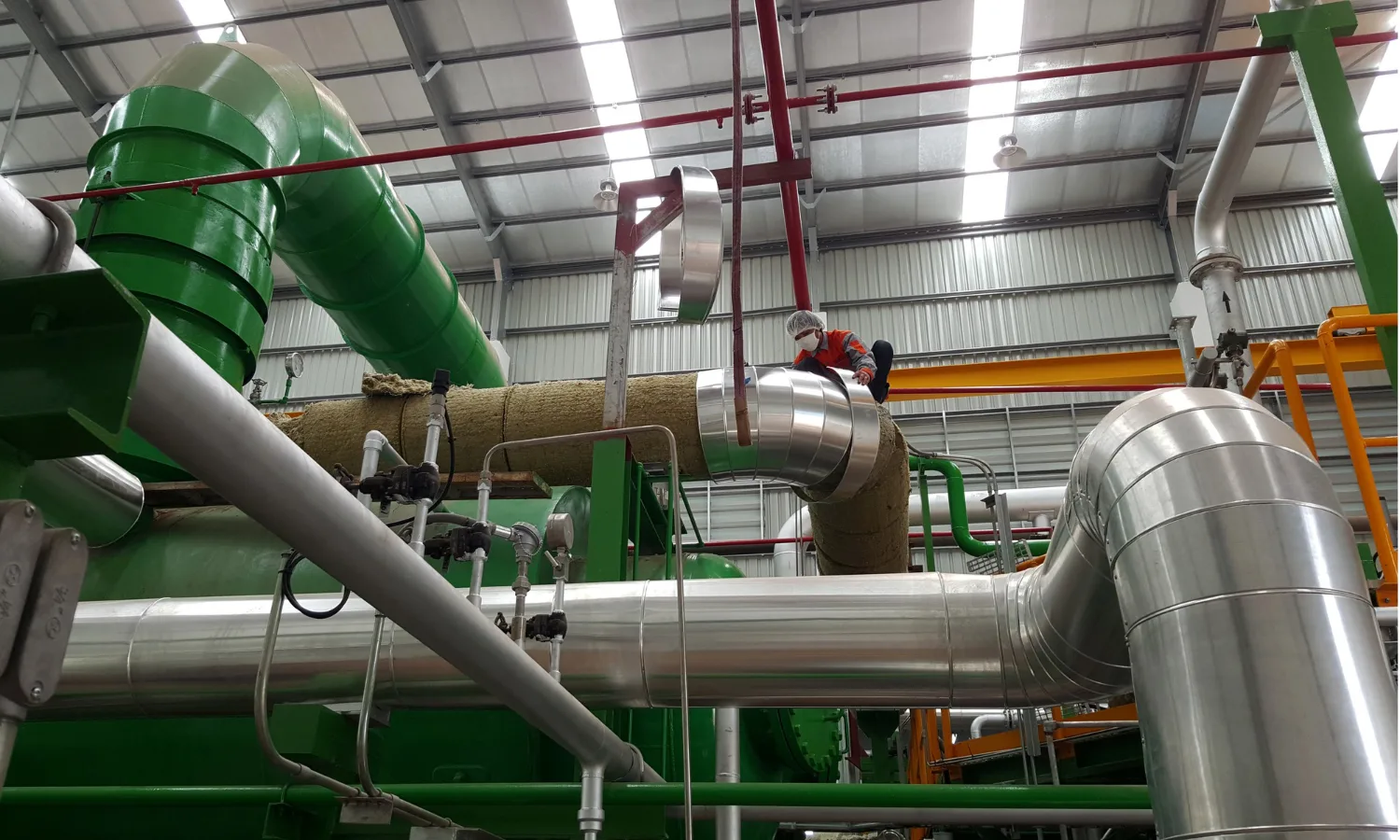
Steam inlet and exhaust connections, lubrication, cooling, condensate handling, and control systems must be coordinated with the turbine installation sequence.
Connected piping must be supported and aligned so that it does not impose external loads beyond the limits permitted by the turbine manufacturer. Supports, hangers, and provisions for thermal expansion must follow the approved design, allowing the piping to accommodate temperature-related movement without adversely affecting turbine alignment. Where required, equipment position and alignment should be rechecked after piping installation.
Integration checks may cover:
Steam piping: Connection locations, supports, drains, and applicable inspection requirements.
Lubrication systems: Oil tanks, pumps, filters, coolers, and associated piping.
Cooling and condensate systems: Connections, valves, and supporting equipment.
Electrical and instrumentation interfaces: Sensors, actuators, control devices, and associated connections.
Inspection, Testing, and Pre-Commissioning Checks
Pre-commissioning verifies that the turbine and its associated systems meet the requirements for commissioning. Commissioning then involves the prescribed checks and controlled startup activities needed to establish readiness for operation.
Depending on the turbine design and project scope, turbine pre-commissioning checks may include:
- Mechanical inspection
Review assembly records, fastening, clearances, coupling arrangements, and outstanding inspection points.
- Piping inspection and testing
Complete applicable weld inspections, pressure tests, and specified cleaning activities.
- Lubrication-system flushing
Flush the oil circuits using the approved procedure and specified cleanliness criteria. Where required, use temporary flushing arrangements to prevent contaminants from reaching sensitive components.
- Steam-line cleanliness
Complete the specified cleaning or steam-blowing procedure, where required, before admitting steam to the turbine.
- Auxiliary equipment checks
Verify pump operation, motor rotation, cooling arrangements, and other support systems.
- Instrumentation and controls
Complete the required instrument calibration, loop checks, control-function tests, alarm verification, and protective interlock tests to confirm that monitoring, control, and protection functions operate as specified.
- Documentation and safety
Review inspection reports, test records, equipment reinstatement, isolation arrangements, permits, and required approvals.
Establishing Readiness for Commissioning
Once the required pre-commissioning checks are complete, the project team conducts a formal readiness review before authorizing the planned startup sequence. This review confirms that:
- Installation, alignment, inspection, and testing records are accepted.
- Essential lubrication, cooling, and auxiliary systems are available.
- Instrumentation, controls, alarms, and protection systems have completed required checks.
- Outstanding punch-list items have been closed or formally accepted for deferral in accordance with project procedures and the applicable commissioning-readiness requirements.
- Applicable OEM, EPC, owner, and statutory approvals have been obtained.
Mechanical completion alone does not authorize startup. Commissioning should proceed only after the designated responsible parties confirm readiness under approved procedures.
How Southern Engineering Erectors (SEE) Supports Steam Turbine Installation
SEE's industrial mechanical erection capabilities, including turbine-generator installation and alignment, support equipment positioning, assembly, and verification on power and cogeneration projects. Its industrial piping capabilities also support the installation and coordination of connected plant systems.
Through coordinated site execution, inspection, and testing within its project scope, SEE supports the work leading to mechanical completion and pre-commissioning readiness. All activities remains subject to approved engineering requirements, OEM procedures, project specifications, and the responsibilities of the designated commissioning team.