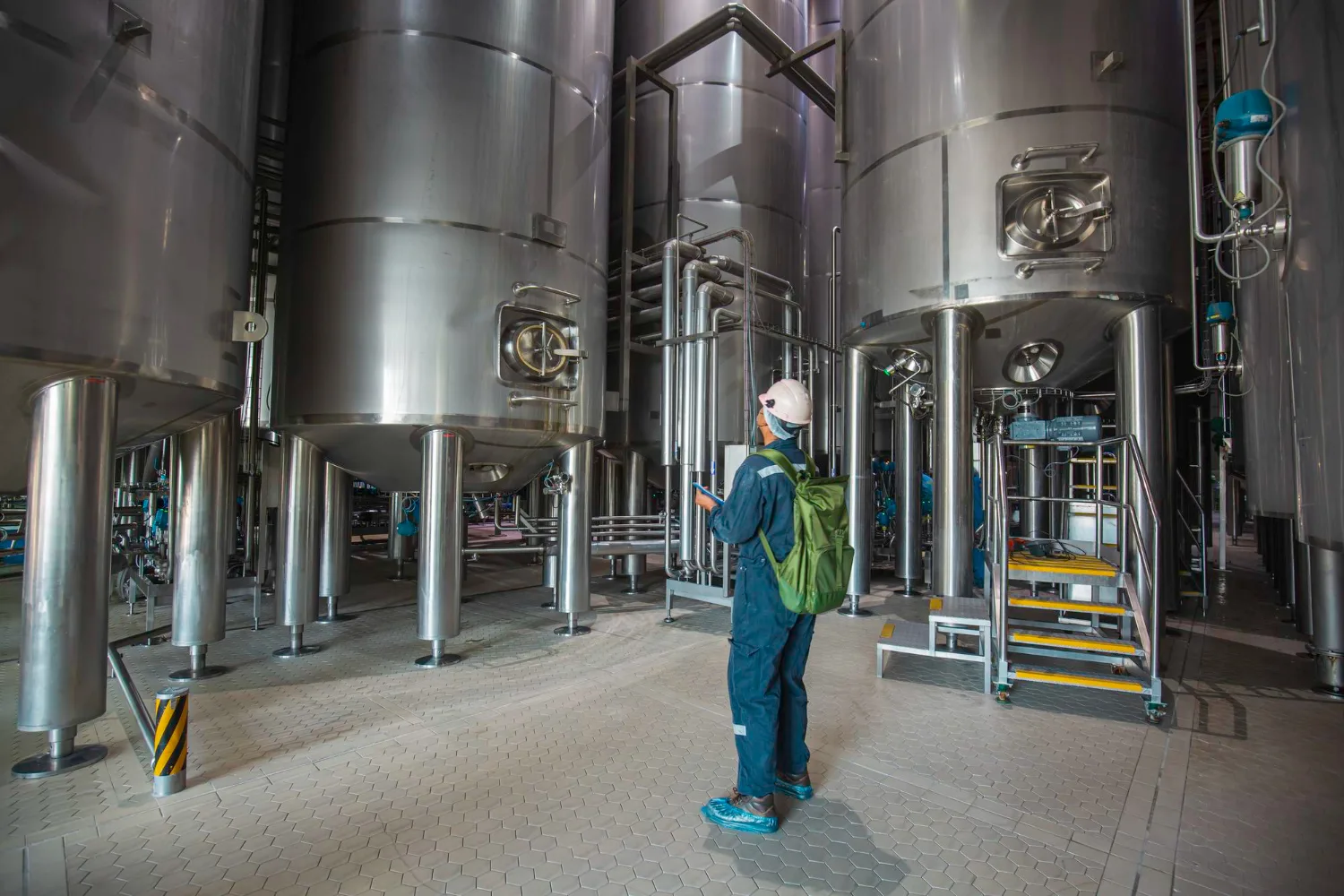
Ethanol plants may produce the same final product, but the engineering and execution requirements can vary significantly depending on the feedstock.
Grain-based and sugarcane-based ethanol plants both involve fermentation, distillation, utilities, storage, and supporting infrastructure. However, differences in feedstock handling, process configuration, utility integration, and plant layout can significantly change the EPC scope.
For project owners, understanding these differences early is important for defining responsibilities, estimating project requirements, and avoiding gaps during execution.
At Southern Engineering Erectors (SEE), our experience across sugar, distillery, power, and process industries provides practical understanding of these different plant configurations.
The primary difference starts with how the feedstock enters the process.
𝗚𝗿𝗮𝗶𝗻-𝗕𝗮𝘀𝗲𝗱 𝗘𝘁𝗵𝗮𝗻𝗼𝗹
Grain-based plants commonly use maize or other grains. The process typically includes grain receiving and storage, cleaning, milling, slurry preparation, liquefaction, fermentation, distillation, and by-product handling.
This creates significant requirements for:
• Grain handling and conveying • Milling and slurry systems • Process and utility piping • Distillation and evaporation • By-product handling and storage • Water, steam, and cooling systems
𝗦𝘂𝗴𝗮𝗿𝗰𝗮𝗻𝗲-𝗕𝗮𝘀𝗲𝗱 𝗘𝘁𝗵𝗮𝗻𝗼𝗹
Sugarcane-based plants generally use sugarcane juice, syrup, or molasses. These facilities are often integrated with sugar mills, creating additional interfaces with existing process equipment and utility systems.
The EPC scope may therefore include:
• Juice, syrup, or molasses handling • Fermentation and distillation • Steam and condensate systems • Boiler and cogeneration integration • Existing sugar-mill utility connections • Process-water and effluent systems
The final product may be the same, but the engineering interfaces are not.
Grain-based plants require dedicated infrastructure for unloading, conveying, cleaning, milling, and storage. These systems must be coordinated with the main process area and material-handling routes. In a sugarcane-based facility, feedstock may come from an existing sugar mill or storage system. This can reduce some standalone infrastructure but introduce brownfield challenges involving existing equipment, piping, structures, and operating utilities. As a result, plant layout and piping routes need to be developed around the specific project configuration.
Both plant types require extensive piping, but the distribution of systems can differ. Grain-based plants typically require piping across slurry preparation, fermentation, distillation, evaporation, drying, cooling water, steam, condensate, and other utilities. Sugarcane-based plants can have additional interfaces with sugar processing, molasses or syrup systems, boiler houses, turbines, process steam users, and condensate recovery. Equipment nozzles, pipe routing, supports, valves, access, drainage, and maintenance requirements all need to be coordinated during engineering and erection.
Steam is critical to ethanol production, particularly for distillation and evaporation. In sugarcane-based facilities, the steam system is often closely integrated with cogeneration. Steam may move between the boiler, turbine, process users, and condensate recovery system. This makes piping flexibility, thermal expansion, supports, pressure conditions, and equipment interfaces particularly important. Where applicable, IBR requirements also add specific requirements for material selection, welding, inspection, testing, traceability, and documentation.
The differences between the two configurations become particularly important during project execution.
Equipment and Piping Interfaces Ethanol plants involve multiple equipment packages and vendors. Tanks, pumps, heat exchangers, boilers, turbines, and process equipment must ultimately connect into one functioning system. Any mismatch between equipment nozzles, piping routes, structural supports, or utility requirements can result in site modifications and rework. This becomes particularly important in integrated sugarcane-based facilities where new systems may have to connect with existing infrastructure.
Brownfield and Greenfield Execution Sugarcane-based ethanol projects integrated with existing sugar mills may involve restricted access, existing structures, operating equipment, shutdown requirements, and modifications to existing piping. Grain-based facilities are often developed as standalone greenfield projects, allowing greater flexibility in plant layout and infrastructure planning. However, greenfield projects still require careful coordination between process, utilities, material handling, storage, and supporting systems. The execution strategy therefore needs to reflect the actual project environment.
Fabrication, Testing and Quality Regardless of feedstock, successful EPC execution depends on accurate fabrication, qualified welding, dimensional control, inspection, testing, and documentation. For critical piping systems, material traceability and welding records are essential. IBR systems also require compliance with applicable statutory inspection and approval requirements. Coordinating these activities with equipment erection and commissioning helps minimise delays and rework.
Before finalising an EPC contractor, owners should clearly define responsibilities for:
A clearly defined scope reduces the risk of gaps between technology suppliers, equipment vendors, EPC contractors, and site execution teams.
For an ethanol project, equipment supply alone does not determine successful execution.
The EPC partner should understand how process requirements translate into practical engineering, fabrication, piping, erection, testing, and commissioning.
Owners should look for experience in:
At Southern Engineering Erectors (SEE), our capabilities cover engineering, fabrication, supply, installation, testing, and commissioning across power and process industries.
Our experience includes industrial piping, IBR piping, boiler systems, cogeneration, sugar, distillery, and ethanol-related projects.
Whether it is a standalone grain-based ethanol plant, an integrated sugarcane-based distillery, or a brownfield expansion, successful execution depends on coordinating process equipment, piping, utilities, and supporting infrastructure as one integrated system.
The difference between grain-based and sugarcane-based ethanol is therefore not limited to the feedstock.
It affects the plant layout, piping requirements, utility integration, equipment interfaces, and overall EPC execution strategy.
Understanding these differences early allows owners to define the EPC scope more clearly—and execute the project with fewer interface risks.